
WELCOME BONUS 300%
UP TO €2000 + 100
FREE SPINS
Home → Blackjack
Blackjack at Megawin Casino: Variants, Rules and Payouts
Blackjack Party runs with two hosts
Blackjack Party at Evolution features a betting range from 1.00 EUR to 1,000 EUR per hand, which accommodates both cautious starters and high rollers seeking significant stakes during the session. The table operates with standard blackjack rules where players aim to beat the dealer without exceeding twenty-one points using multiple decks of cards. This structure allows users to manage their bankroll effectively while enjoying the unique atmosphere created by the interactive elements present at this specific venue.
The presence of two live hosts adds a dynamic social layer to the digital gameplay, distinguishing it from automated single-dealer tables that lack human interaction or commentary. Players can engage with these hosts as they navigate through various rounds, observing how different strategies perform against the house edge inherent in every card dealt. The minimum stake of 1.00 EUR makes entry accessible for casual players who wish to test basic strategy without committing large sums of money initially.
Standard payouts apply to winning hands, with a natural blackjack typically paying 3:2 unless specified otherwise by specific variant rules active during the current game session. Insurance bets are available when the dealer shows an ace, offering a separate wager that pays 2:1 if the dealer also holds a ten-value card underneath. Understanding these payout structures is crucial for calculating expected returns over time, especially since side bets often carry significantly higher house edges than the main game.
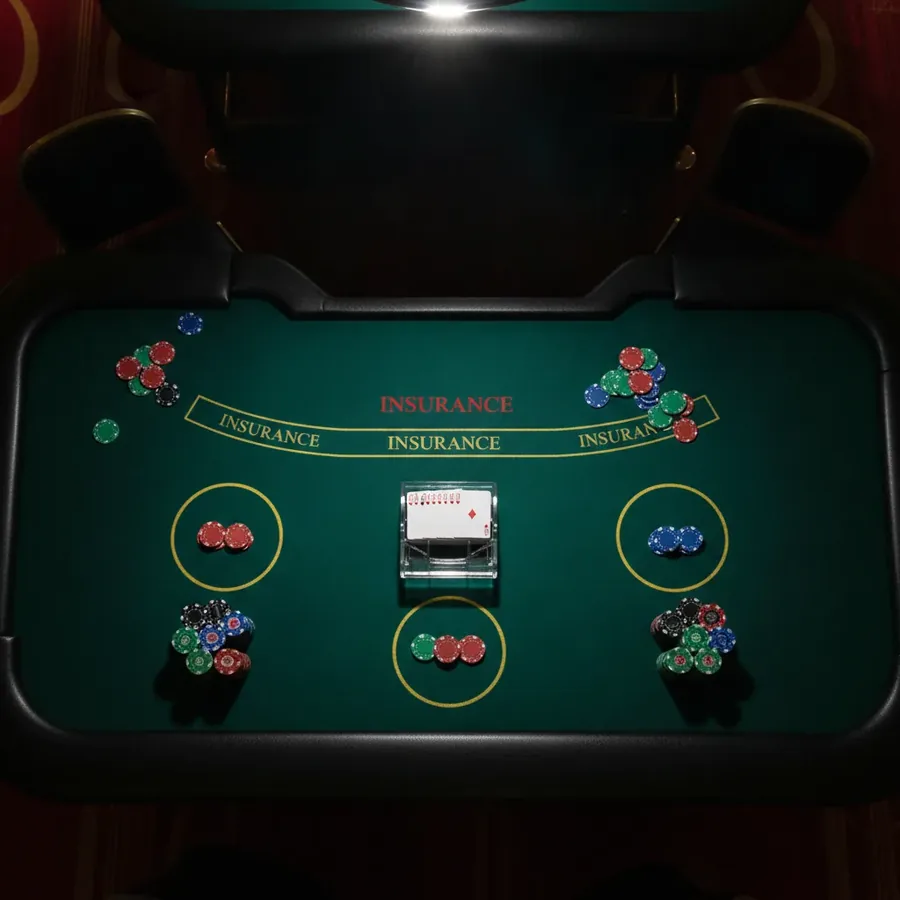
Chose Wrong Table for 5 EUR Bankroll
Starting with only 5 EUR on Infinite Blackjack limits play severely because the minimum bet is 1 EUR, leaving no room for doubling down after splitting pairs or increasing stakes strategically. Lightning Blackjack requires a minimum of 1 EUR but offers multipliers up to 25x, yet the volatility demands a larger buffer to survive losing streaks before hitting a lucky multiplier event. Players must assess whether their small budget can withstand the variance associated with these high-limit or feature-rich tables versus more conservative options available elsewhere.
Infinite Blackjack allows unlimited seats and bets up to 5,000 EUR, creating a steep disparity for those with minimal funds who cannot afford to chase losses or wait for favorable conditions. The RTP stands at 99.47%, which is respectable, but the ability to place four side bets like Any Pair or Bust It introduces additional risk that drains small balances quickly. Without sufficient capital, a player might exhaust their 5 EUR allowance within just five to ten hands if they fail to hit a winning sequence early on.
Blackjack Party restricts maximum bets to 1,000 EUR but maintains a 1 EUR floor, meaning even this table consumes a fifth of a 5 EUR bankroll per round if played consistently. The host-driven format may encourage impulsive betting due to peer pressure or entertainment value, leading novices to ignore basic strategy principles and make costly errors under social influence. A disciplined approach would require sticking strictly to optimal moves despite the engaging environment provided by the dual-host setup designed to enhance user engagement levels.
Clicked Too Late: Hand Is Automatically Held
When a player fails to act within the designated time limit during Infinite Blackjack, the system automatically holds any hand containing a total below seventeen points, preventing further improvement opportunities. This rule ensures the game proceeds smoothly for all participants, particularly important in infinite seat environments where delays by one individual can disrupt the flow for dozens of others waiting at the virtual table. Such automatic actions remove player agency, potentially resulting in suboptimal outcomes compared to making a deliberate decision based on observed dealer upcards and remaining deck composition.
The strict timing mechanism applies equally across all Evolution live dealer tables, including Lightning Blackjack where rapid decisions are needed to capitalize on potential lightning multipliers applied to winning hands. If a player misses the window to double down or split, they forfeit these strategic advantages, locking into a static hand that may lose against a strong dealer finish. Consistent lateness not only harms individual results but also contributes to frustration among fellow players who expect timely completion of each round without unnecessary interruptions.
Understanding the consequences of delayed clicks helps players prepare their devices and internet connections to minimize latency issues that could trigger automatic holding of weak hands. While the base game RTP remains unaffected by individual timing errors, the cumulative effect of missed opportunities significantly reduces overall profitability for frequent offenders who neglect proper preparation. Maintaining focus and readiness throughout the session is essential to avoid letting technical limitations dictate financial outcomes during high-stakes interactions with professional dealers.
Stand-on-17 Rule and Its Meaning for Players
Dealer standing on soft seventeen (S17) reduces the house edge by approximately 0.22 percentage points compared to hitting soft seventeen, benefiting long-term player expectations across various blackjack variants. This rule change favors the gambler because the dealer is less likely to improve a marginal hand, thereby increasing the probability that player busts will result in immediate wins rather than pushes. Variants like Liberal Vegas Strip utilize S17 alongside other favorable rules to achieve an exceptionally low house edge of just 0.28% for skilled participants following perfect strategy.
In contrast, tables requiring the dealer to hit soft seventeen increase the casino advantage, forcing players to adjust their basic strategy charts slightly to account for the higher likelihood of dealer improvement. This adjustment often involves more aggressive playing on certain totals, such as doubling down more frequently or taking additional hits on borderline hands that would previously be stood upon. Recognizing which rule set applies before sitting down is critical for minimizing the inherent house edge and maximizing potential returns over extended periods of play.
The difference between S17 and H17 becomes mathematically significant when calculated over thousands of hands, potentially costing or saving players substantial amounts depending on their initial choice of table. For instance, choosing a game with H17 instead of S17 might cost an extra 0.22% in theoretical loss rate, translating to roughly 2.20 EUR lost per 1,000 EUR wagered. Selecting games with S17 rules, therefore, represents a simple yet effective method for reducing the casino's mathematical advantage without altering fundamental gameplay mechanics or strategies employed by experienced players.
Bust at 22: Stake Lost Immediately
Some blackjack variants impose a 'bust at 22' rule where any hand totaling exactly twenty-two points results in an automatic loss, regardless of the dealer's final hand value or potential bust status. This specific condition drastically increases the house edge by penalizing players who naturally reach twenty-two through standard drawing procedures, turning what might otherwise be a push or win into an immediate defeat. Players encountering this rule must adjust their expectations and recognize that reaching twenty-two no longer guarantees safety against a dealer standing on lower totals like nineteen or twenty.
The impact of this rule is most severe in single-deck games where achieving twenty-two is statistically more probable due to fewer cards available in the shoe compared to multi-deck variations. In standard six-deck games without this clause, twenty-two acts as a bust only if the dealer does not also exceed twenty-one, but under the modified rule, it always loses. This modification disproportionately affects casual players who rely on intuitive counting or pattern recognition, as the usual heuristic of 'twenty-two is safe' becomes dangerously misleading in practice.
For those playing Infinite Blackjack or similar titles, verifying the specific ruleset before placing bets is essential to avoid falling victim to unexpected losses on seemingly strong hands. The presence of side bets like Hot 3 or Bust It may offer alternative ways to profit from high totals, but the main game penalty for hitting twenty-two remains unchanged and punitive. Understanding these nuances allows players to make informed decisions about whether the potential rewards justify the increased risk associated with non-standard bust conditions prevalent in some modern adaptations.
Blackjack variants at a glance
| Variant | Payout | House edge | Rule | Bet range |
|---|---|---|---|---|
| Blackjack Liberal Vegas Strip (liberale Regeln, 3:2) | 99.72% | 0.28% | Günstigste Regelkombination: S17 + DAS + Resplit + Late Surrender. Standardabweichung 1,15 | Blackjack 3:2, Gewinn 1:1 |
| Blackjack Ein Deck, klassische Regeln, 3:2 | 99.85% | 0.15% | Weniger Decks = niedrigerer Vorteil; ein Deck gibt ca. −0.48 Prozentpunkte gegenüber 8 Decks. Oft durch 6:5 Auszahlung kompensiert. | Blackjack 3:2, Gewinn 1:1 |
| Blackjack 6 Decks, S17, DAS, DOA, Auszahlung 3:2, Basisstrategie | 99.54% | 0.46% | Dealer steht auf Soft 17; Verdopplung auf jeder Zweierkarte; Verdopplung nach Split erlaubt; keine Aufgabe. Basisstrategie ist für diesen Wert zwingend | Blackjack 3:2, normaler Gewinn 1:1, Insurance 2:1 |
| Blackjack Auszahlung 6:5 statt 3:2 (6 Decks) | 98.15% | 1.85% | Ersatz von 3:2 durch 6:5 fügt exakt +1.39 Prozentpunkte zum Vorteil des Casinos hinzu – stärker als jede andere Regeländerung. Bei $10 Einsatz zahlt Blackjack $12 statt $15. | Blackjack 6:5, Gewinn 1:1 |
| Blackjack Insurance / Versicherung (6–8 Decks) | 92.53% | 7.47% | Separate Nebenwette bis 50% der Hauptwette, wenn der Dealer ein Ass hat. Basisstrategie schreibt IMMER Ablehnung vor (außer Karten zählen bei True Count ≥ +3). Bei einem Deck Vorteil ≈ 5.88% | Insurance 2:1 |
| Blackjack Split / Double / H17 – Regel-Effekte | n.a. (Regel-Modifikatoren) | H17 +0.22 Prozentpunkte; RSA −0.08 Prozentpunkte; DAS −0.14 Prozentpunkte | Dealer Hits Soft 17 verschlechtert RTP um 0.22 Prozentpunkte; Resplit Aces verbessert um 0.08 Prozentpunkte; Double After Split verbessert um ca. 0.14 Prozentpunkte; 6 Decks statt 8 – ca. 0.02 Prozentpunkte. | Double – Einsatz ×2 mit einer Karte; Split – bis 4 Hände; Ass-Split meist mit einer Karte. |
Seat change at the Live Table in 20 seconds
Infinite Blackjack by Evolution allows unlimited players to join the table, ensuring a seat is available immediately without waiting for a specific chip placement. This structure supports high-stakes action with betting limits ranging from 1 to 5,000 EUR, accommodating both casual testers and high rollers seeking volume. The absence of seat restrictions facilitates rapid transitions between hands, maximizing the number of decisions per hour on mobile devices.
Lightning Blackjack offers a different dynamic with multipliers up to 25x on winning hands, operating within a stake range of 1 to 2,500 EUR. While the RTP stands at 99.56%, the variable nature of lightning strikes introduces higher volatility compared to standard tables. Players must adapt their bet sizing to handle these swings while navigating the mobile interface efficiently.
Blackjack Party features two moderators creating a party atmosphere, with stakes between 1.00 and 1,000 EUR providing a middle-ground option. Unlike the infinite model, this variant may have implicit seat caps or slower rotation due to the interactive hosting style. The distinct visual layout requires responsive design adjustments to ensure controls remain accessible during rapid gameplay sessions.
What a Natural Blackjack Practically Pays Out
A natural blackjack typically pays out at 3:2 odds, meaning a 10 EUR wager returns 15 EUR in profit plus the original stake. This standard payout applies to variants like Blackjack 6 Decks and Liberal Vegas Strip, which offer an RTP of 99.72% when combined with favorable rules. Mobile users benefit from clear display of these ratios to calculate potential returns instantly before placing chips.
Some tables use a 6:5 payout structure, such as the 6-deck variant listed with an RTP of 98.15%, where a 10 EUR bet yields only 12 EUR profit. This change adds exactly 1.39 percentage points to the house edge, significantly reducing long-term value for the player. The discrepancy is critical for mobile gamblers who may overlook small print details during quick sessions.
Insurance bets pay 2:1 but carry a house edge of 7.47% for 6-8 deck games, making them statistically unfavorable for most strategies. Basic strategy dictates always rejecting insurance unless counting cards with a true count of +3 or higher. On smaller screens, tapping the wrong button can accidentally purchase this side bet, draining bankrolls faster than intended.
Ignored Basic Strategy Chart: 1 Percent Wasted
Blackjack 6 Decks with S17, DAS, and DOA rules provides a theoretical RTP of 99.54%, requiring strict adherence to basic strategy to achieve this figure. Deviating from optimal play can easily erode this advantage, effectively wasting approximately one percent of expected return over time. Mobile players often rely on memory rather than charts, increasing the risk of costly errors.
Single-deck classics offer a superior RTP of 99.85% due to fewer cards in the shoe, reducing the house edge to just 0.15%. However, these games are frequently compensated with 6:5 payouts, which negate the mathematical benefit of the single deck. Players ignoring strategy on these tables face a compounded disadvantage that mobile interfaces rarely highlight prominently.
Liberal Vegas Strip combines S17, DAS, resplitting, and late surrender to lower the house edge to 0.28%, resulting in an RTP of 99.72%. Achieving this efficiency demands precise decision-making for every possible dealer up-card and player hand combination. Failure to consult strategy charts on mobile devices transforms these favorable conditions into average outcomes.
How much time is left for the decision?
Live dealer games impose strict time limits for actions, forcing players to make split-second decisions on mobile touchscreens. Infinite Blackjack allows up to 5,000 EUR bets, requiring quick verification of bankroll availability before the timer expires. Delays caused by slow internet connections or fumbling fingers can lead to automatic folds, costing the player their stake.
Lightning Blackjack operates with a similar pressure, offering multipliers up to 25x but demanding immediate acceptance or rejection of lightning bolts. The betting window closes rapidly once the dealer reveals their hole card, leaving little room for hesitation. Mobile layouts must prioritize large, easily tappable buttons to prevent accidental delays during these critical moments.
Standard RNG games do not feature live timers but require efficient navigation through menus to maintain pace. Blackjack Party’s moderator-led format may introduce slight pauses between rounds for entertainment purposes. Players must balance engagement with speed, ensuring they do not miss subsequent deals while watching the stream on smaller displays.
RNG draws cards from virtual eight-deck shoe
Most digital blackjack variants utilize a virtual shoe containing six or eight decks, affecting the probability of drawing specific cards. The 6-deck version with S17 rules achieves an RTP of 99.54%, while switching to 8 decks typically increases the house edge by approximately 0.02 percentage points. Mobile algorithms shuffle these decks after each hand to ensure independence and fairness.
Resplitting Aces improves the RTP by 0.08 percentage points, allowing players to recover more value from weak starting hands. This rule modifier is particularly beneficial in games using multiple decks, where the likelihood of hitting another ace remains consistent. Mobile interfaces must clearly indicate when resplitting is permitted to avoid confusion during rapid play.
Dealer hitting on soft 17 (H17) negatively impacts the player by adding 0.22 percentage points to the house edge compared to standing rules. Variants like Lightning Blackjack and Infinite Blackjack generally adhere to S17 rules, preserving better odds for the gambler. Understanding these subtle differences helps mobile players select tables that maximize their theoretical return.
16 vs 10 played incorrectly: most common error
The basic strategy for a hard sixteen against a dealer ten is to surrender or stand, not to hit. Hitting this hand increases the house edge significantly compared to the optimal play of standing on soft hands like Soft 17 (S17). This specific rule difference contributes +0.22 percentage points to the house advantage when dealers hit on soft seventeen.
In standard Vegas Strip games offering late surrender, players can forfeit half their bet to mitigate losses in this high-risk scenario. The surrender option improves the Return to Player (RTP) by approximately 0.08 percentage points, making it a valuable tool for bankroll management. Without surrender, the player faces a steeper decline in expected value over thousands of hands.
Players should calculate the long-term cost of hitting sixteen, which often results in busting with cards valued at seven or higher. Standing preserves the bankroll longer than the statistically inferior hit decision. This disciplined approach aligns with the rigorous requirements of the 300% welcome bonus wagering terms.
What doesn't count as Blackjack after Split?
Splitting Aces typically restricts each new hand to receiving exactly one additional card, preventing further splits or draws. This limitation means that a two-card total of twenty-one formed after splitting Aces does not qualify as a natural Blackjack paying 3:2. Instead, it pays even money at 1:1, reducing the potential payout from €150 to €100 on a €100 stake.
The distinction between a natural Blackjack and a twenty-one made via splitting directly impacts the game's RTP and house edge calculations. Games offering liberal rules like Resplit Aces (RSA) improve RTP by -0.08 percentage points, yet the payout remains capped at 1:1 for split totals. This rule variant is crucial for understanding the true value of different table configurations.
Understanding these restrictions helps players manage expectations during high-variance sessions under the mobile play interface. The 1:1 payout for split twenties contrasts sharply with the 3:2 payout for initial naturals. This difference accumulates quickly, affecting the overall return required to clear the 40x wagering requirement on the €2,000 max bonus.
Splitting costs double bet: plan budget
Every time a player chooses to split a pair, they must place an additional bet equal to the original wager on the new hand. This action instantly doubles the risk exposure per round, requiring careful bankroll allocation before entering Infinite Blackjack or Classic Seven-Seat tables. The maximum bet limit of €5,000 applies to the total active stake, including split hands.
Budget planning must account for the increased variance introduced by splitting pairs like tens or eights frequently. While doubling after split (DAS) offers strategic flexibility, it also multiplies the financial commitment if multiple splits occur. Players should ensure their deposit covers at least fifty times the average session bet to withstand normal statistical deviation.
Table games contribute only 10% toward the wagering turnover for the 300% welcome bonus, making efficient bankroll usage critical. A single split decision can consume a disproportionate amount of the required turnover calculation. Strategic patience prevents rapid depletion of funds needed to meet the €80,000 turnover threshold on the full bonus amount.
Bet two percent of bankroll per hand
Adhering to a fixed betting unit of two percent of the total bankroll minimizes the risk of ruin during losing streaks. For a €1,000 balance, this translates to a €20 bet per hand, providing sufficient volume to experience the theoretical RTP of 99.54%. This conservative approach is essential when playing variants with a 0.46% house edge.
Smaller bet sizes allow players to survive the volatility inherent in blackjack without breaching table limits or exhausting funds prematurely. In contrast, aggressive betting strategies often lead to rapid loss of the initial deposit before meeting wagering requirements. The 10% contribution rate for table games demands a larger effective bankroll compared to slots contributing 100%.
This disciplined staking method ensures longevity during the playthrough of the 100 free spins or cash bonus components. Maintaining a steady bet size reduces emotional decision-making and promotes adherence to basic strategy charts. Consistent application of this rule protects the player from the detrimental effects of chasing losses.
Infinite Blackjack vs Classic Seven-Seat Table
Infinite Blackjack by Evolution allows unlimited players to join the same virtual seat, creating a continuous flow of hands. The game features four side bets including Any Pair and Bust It, with an RTP of 99.47%. Bets range from €1 to €5,000, accommodating both casual and high-stakes mobile players.
Classic Seven-Seat tables offer a traditional layout where physical seats are limited to seven participants at any given time. These tables often feature stricter rules but provide a more controlled environment with fewer variables affecting hand speed. The absence of infinite seating changes the pacing and social dynamics compared to the lightning-fast deals of Infinite versions.
Choosing between these formats depends on the player's preference for side bet variety versus traditional gameplay structure. Infinite Blackjack's higher maximum bet limit supports larger wagers necessary for clearing bonuses efficiently. Players should compare the specific rule sets, such as S17 or DAS, to determine which format offers the lowest house edge for their strategy.
Contact
Live - online chat
Banking









Providers












Megawin Casino 2026